

 中文简体
中文简体 Español
 عربى
عربى
Request for a call today
What Is a Brushed Nickel Copper Lock Cylinder?
If you have ever shopped for door locks or replacement cylinders, you have probably seen the term "brushed nickel" on product labels. But when the product is a brushed nickel copper lock cylinder, the name actually refers to two different things. One is the material underneath. The other is the surface finish on top. Knowing the difference helps you pick the right cylinder without paying for features you do not need.
The base metal is brass or copper
A brushed nickel copper lock cylinder starts with a solid brass core. Brass is an alloy made mostly of copper with some zinc mixed in. Manufacturers use brass for lock cylinders because it machines cleanly and handles repeated key insertion without wearing out fast.
The copper content in brass gives the cylinder several practical advantages. It resists rust, which steel cannot do. It also provides smooth key operation because brass does not grip or gall against the brass keys sliding in and out.
So when you see brushed nickel copper lock cylinder, the "copper" part tells you the base material is copper-based alloy, not steel or zinc. That matters for durability and long-term performance.
Brushed refers to the texture
The word "brushed" describes how the surface looks and feels. A brushed finish means the metal has been rubbed with fine abrasive material in one direction. This creates tiny parallel lines across the surface.
A brushed nickel copper lock cylinder has that linear grain visible to the eye and slightly detectable by touch. The brushing serves a few practical purposes. It hides small scratches that happen during normal use. It does not show fingerprints the way a shiny mirror finish does. And many people simply prefer the look over high-gloss surfaces.
The brushing happens after the nickel plating is applied. The abrasive removes just the top layer of nickel in fine lines but does not strip the plating completely.
Nickel is the outer layer
The "nickel" in a brushed nickel copper lock cylinder is a thin electroplated coating over the brass base. This nickel layer is usually between 5 and 25 microns thick, which is about the thickness of a few sheets of paper.
This nickel plating does several jobs. It gives the cylinder a consistent silver color rather than the yellowish tone of raw brass. It adds a layer of corrosion resistance, especially useful in normal indoor environments. And it provides a suitable surface for the brushing process.
A brushed nickel copper lock cylinder is not made of solid nickel. Only the visible surface contains nickel. The underlying structure remains brass throughout.
How it compares to other finishes
A brushed nickel copper lock cylinder falls somewhere in the middle when compared with other common finishes.
Against polished chrome: Chrome has a cool, bluish-silver look and very high reflectivity. It shows every fingerprint and water spot. A brushed nickel copper lock cylinder looks warmer in tone, less reflective, and hides daily smudges much better.
Against satin nickel: People mix these up all the time. Satin nickel has a smooth, slightly glossy surface without visible grain lines. A brushed nickel copper lock cylinder has a distinct linear texture you can actually feel.
Against stainless steel: Solid stainless contains no plating. It will outlast any plated finish in harsh conditions but has a colder appearance. A brushed nickel copper lock cylinder offers a warmer look at a lower cost.
Where this finish works better
A brushed nickel copper lock cylinder performs well in interior settings where appearance matters and conditions stay reasonable.
Good applications include:
- Office doors and commercial entryways
- Hotel guest room locks where guests notice the hardware
- Residential front doors and interior passage sets
- Cabinet locks in kitchens or furniture
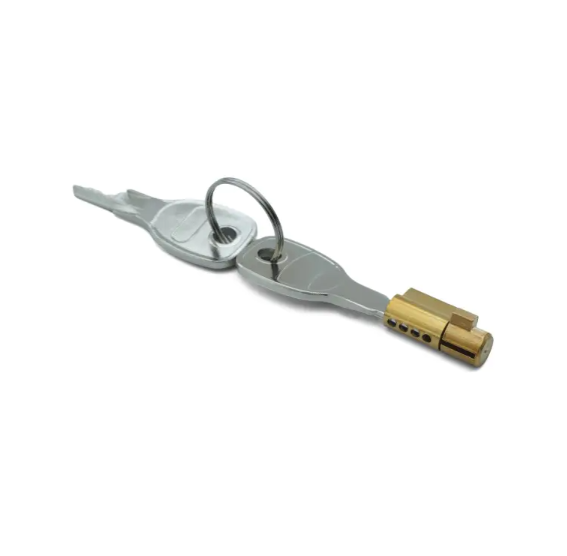
The brushed texture on a brushed nickel copper lock cylinder resists visible wear from keys sliding in and out. That makes it a practical choice for daily-use doors.
What to watch out for
No finish is perfect, and a brushed nickel copper lock cylinder has limits buyers should understand.
The nickel layer can wear through over time at high-contact spots. The face of the cylinder around the keyway sees the most friction. Once that spot loses its nickel, the yellow brass underneath becomes visible. This does not affect how the lock works, but it changes the appearance.
For outdoor use near saltwater or in industrial plants, a brushed nickel copper lock cylinder may not hold up well. Salt air finds its way through tiny gaps in the plating and attacks the brass. In those conditions, stainless steel cylinders make more sense.
Very heavy daily use in places like school dormitories or train station lockers will eventually smooth out the brushed texture at contact points. Again, function stays fine, but the look changes.
The manufacturing sequence
Making a brushed nickel copper lock cylinder follows a clear sequence of steps.
First, the brass cylinder gets machined to precise dimensions. Then the part goes through cleaning to remove any oil or residue. Next, nickel gets electroplated onto the brass surface. After plating, abrasive brushes create the linear grain pattern. Some manufacturers add a clear topcoat to protect the brushed finish from dulling over time.
The thickness of the nickel plating and the quality of the brushing determine how long the finish lasts. A cheap brushed nickel copper lock cylinder may have very thin plating that wears through in months. A better one lasts for years.
How to order correctly
When you need a brushed nickel copper lock cylinder, write your specifications clearly. Do not just say "brushed nickel." That could mean a steel cylinder or a zinc cylinder with the same finish.
Specify:
- Base material: Brass (or copper alloy)
- Finish type: Brushed nickel electroplate
- Plating thickness: At least 10 microns for moderate use
- Optional: Clear lacquer for extra protection
Being specific ensures you receive a brushed nickel copper lock cylinder that matches both your appearance needs and your durability expectations.

 Tel: +86-18858990200
 E-mail: [email protected]
 Add: No. 77, Yidianhong Avenue, Pujiang County, Jinhua City, Zhejiang Province
Copyright 2025 Pujiang Qiying Industry and Trade Co., Ltd. All Rights Reserved 
Custom Lock Cylinder Manufacturers