

 中文简体
中文简体 Español
 عربى
عربى
Request for a call today
Copper Lock Cylinder: Which Material Lasts?
When choosing a lock core, buyers often compare materials without fully understanding how they perform over time. The debate usually centers on one question: is a copper lock cylinder really more durable than iron or zinc alloy? In real-world applications, the answer depends on corrosion resistance, structural stability, and machining precision. This article breaks down how each material behaves and why the copper lock cylinder continues to be widely used.
Material Differences in Daily Use
Different materials bring about very different user experiences. The table below shows how common options compare:
|
Material |
Corrosion Resistance |
Strength Stability |
Lifespan |
Common Issues |
|
Iron |
Low |
High (initially) |
Short |
Rust, jamming |
|
Zinc Alloy |
Medium |
Moderate |
Medium |
Deformation, cracking |
|
Copper |
High |
Stable |
Long |
Higher cost |
Iron-based lock cores may feel solid, but once internal parts begin to rust, performance drops quickly. Zinc alloy improves corrosion resistance, yet over time it may become brittle. In contrast, a copper lock cylinder offers consistent performance due to its natural resistance to corrosion and stable structure.
Why Copper Performs Differently?
The key advantage of a copper lock cylinder lies in the material itself. Brass, commonly used in production, does not rust in the same way as iron. Even if surface coatings wear off, the internal structure of a copper lock cylinder remains stable.
Another factor is friction behavior. A copper lock cylinder has a natural self-lubricating characteristic. Over time, internal components wear in a controlled way, often resulting in smoother operation rather than increased resistance. This is why many users notice that a copper lock cylinder maintains usability even after extended use.
Manufacturing Method Matters
Not all products are equal, even within the same category. A high-quality copper lock cylinder is typically made from solid brass rods through precision machining. This process provides uniform density and reduces internal defects.
By comparison, some lower-cost alternatives use die-casting methods. While faster to produce, these may introduce small air pockets inside the material. Under repeated stress, these weak points can affect the durability of a copper lock cylinder.
Performance Under Testing Conditions
To evaluate durability, manufacturers often rely on standardized tests. A copper lock cylinder usually performs well in both corrosion and mechanical endurance tests.
Salt spray testing simulates humid and corrosive environments. In such conditions, a copper lock cylinder shows slower degradation compared to iron-based options. Durability testing, which involves repeated key insertion and rotation, also demonstrates that a copper lock cylinder can maintain precision after many cycles.
These results explain why a copper lock cylinder is often selected for environments with higher humidity or long-term usage requirements.
Surface Finishes and Applications
A copper lock cylinder can be finished in different ways to match various applications.
|
Finish Type |
Appearance |
Additional Benefit |
Application |
|
Brushed Brass |
Natural tone |
Simple protection |
Residential doors |
|
Nickel Plated |
Silver-gray |
Enhanced corrosion resistance |
Office use |
|
Black Coating |
Matte black |
Added surface protection |
Modern interiors |
These finishing options allow a copper lock cylinder to adapt to different design preferences while maintaining functional reliability.
Where does it work best?
In environments where moisture is present, such as coastal areas or regions with high humidity, a copper lock cylinder tends to perform more consistently. It is also suitable for doors that require frequent use, including residential and commercial settings.
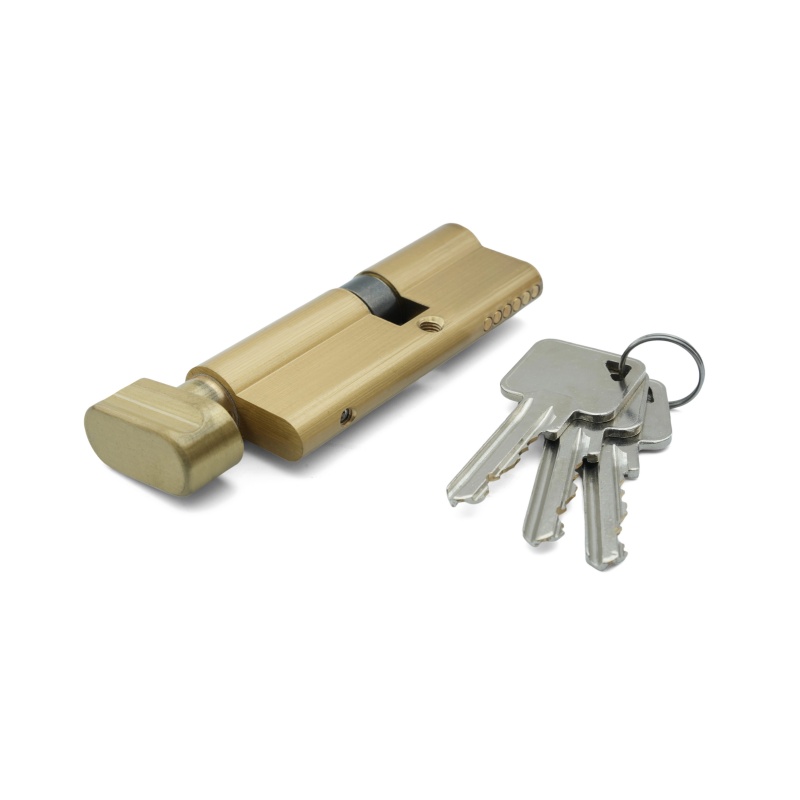
While the upfront cost of a copper lock cylinder may be higher, its longer service life often reduces replacement frequency. Over time, this can make a copper lock cylinder a practical choice for buyers focusing on durability.
Material selection plays a major role in lock performance. Iron may offer strength but is prone to rust, while zinc alloy provides cost advantages with some limitations. A copper lock cylinder, on the other hand, combines corrosion resistance, structural stability, and smoother long-term operation.

 Tel: +86-18858990200
 E-mail: [email protected]
 Add: No. 77, Yidianhong Avenue, Pujiang County, Jinhua City, Zhejiang Province
Copyright 2025 Pujiang Qiying Industry and Trade Co., Ltd. All Rights Reserved 
Custom Lock Cylinder Manufacturers