

 中文简体
中文简体 Español
 عربى
عربى
Request for a call today
Why Rectangular Padlocks Keep Showing Up Everywhere?
A lock only proves its worth after months of rain, dust, vibration, and someone trying to beat it open. Pretty designs don't matter then. What matters is whether the lock still works.
That's why the rectangular padlock keeps showing up in logistics yards, construction sites, truck depots, and factory gates. It's not trying to look good. It's trying to stay locked.
Unlike round padlocks that focus on smooth lines, the rectangular padlock is built around one idea: don't break when someone hits it or pries it.
What Makes the Shape Actually Useful
Most locks fail at the stress points. A crowbar finds the weak spot. A hammer finds the soft corner.
A rectangular padlock spreads that force across a wider area. There's no curved surface to concentrate the impact. The shape itself works against the attacker.
Main reasons the shape holds up:
- Impact spreads across flat surfaces instead of one small spot
- Less room for a pry bar to get a good grip
- The shackle sits deeper inside the lock body
- Body resists twisting better than round designs
- Stays stable even when bolted to vibrating equipment
In heavy use, a rectangular padlock just behaves more predictably. That predictability is why people keep buying them.
Where You Actually See These Locks
One reason the rectangular padlock is everywhere is that it doesn't care about the job. The same lock works on a shipping container, a warehouse door, or an electrical cabinet.
Common places you'll find one:
- Freight containers going cross-country or overseas
- Storage unit doors and warehouse roll-ups
- Construction site tool boxes and fence gates
- Electrical boxes and telecom cabinets
- Industrial machinery with lockout tags
- Outdoor gates that see rain year-round
Logistics companies use the rectangular padlock because it's one less thing to worry about during a 2,000-mile haul. Construction crews use them because they don't jam up after a week of dust.
Rectangular vs Round – What's Different in Real Life
Both lock things. But they don't act the same when things get rough.
|
Feature |
Rectangular Padlock |
Round Padlock |
|
Structural rigidity |
High |
Medium |
|
Anti-pry resistance |
Strong |
Limited |
|
Cutting resistance |
Better body reinforcement |
Weaker overall |
|
Outdoor durability |
Often sealed |
Varies a lot |
|
Industrial use |
Common |
Less common |
A rectangular padlock gets chosen when the risk is real and replacing locks every few months isn't an option.
How to Pick a Good One
Not every rectangular padlock is built the same. Some are cheap shells that look tough but fold under pressure.
Look for these things instead:
- Solid brass or hardened steel body – not thin plated metal
- Anti-drill and anti-pick cylinder – basic pin tumblers are too easy
- Shackle at least 8mm thick for industrial use
- Corrosion-resistant coating if it lives outside
- Passes basic standards like ISO or ANSI
A decent rectangular padlock should still open smoothly after a year on a rainy job site. No sticking. No rusted cylinder.
Facility managers also care about master key systems. Being able to key different locks alike saves hours of hassle.
How They Handle Bad Conditions
Lab tests are clean. The real world is not. A lock on a truck bumper sees road salt, rain, dust, and temperature swings all in one week.
If the internal parts aren't protected, corrosion jams the cylinder fast. A properly made rectangular padlock uses sealed internals and treated surfaces to keep working.
Common protection features:
- Zinc or nickel plating on the body
- Sealed cylinder to keep moisture out
- Hardened shackle that resists bolt cutters
- Weather seals for outdoor installation
These small details decide whether the lock lasts two years or two months.
What's Changing in Padlock Design
The rectangular padlock used to be just a chunk of metal. Now manufacturers are adding features without breaking the basic strength.
Current trends:
- Dual locking – key plus combination dial
- Anti-tamper alarms on higher-end versions
- Color-coded bodies for quick asset identification
- Stronger alloys like boron steel
- Optional Bluetooth or RFID tracking for logistics
These upgrades help the rectangular padlock fit into modern inventory systems instead of just hanging on a hasp.
Why Manufacturing Quality Matters
Two locks can look identical on a website and perform completely differently. The difference is in the factory.
A reliable rectangular padlock comes from a process that checks:
- Raw materials before anything gets stamped
- Salt spray testing to confirm corrosion resistance
- Mechanical load tests on sample units
- Batch consistency – not just one good prototype
We also offer OEM and ODM options. Size changes. Key system changes. Surface finish changes. Branding changes. Whatever a distributor or project needs.
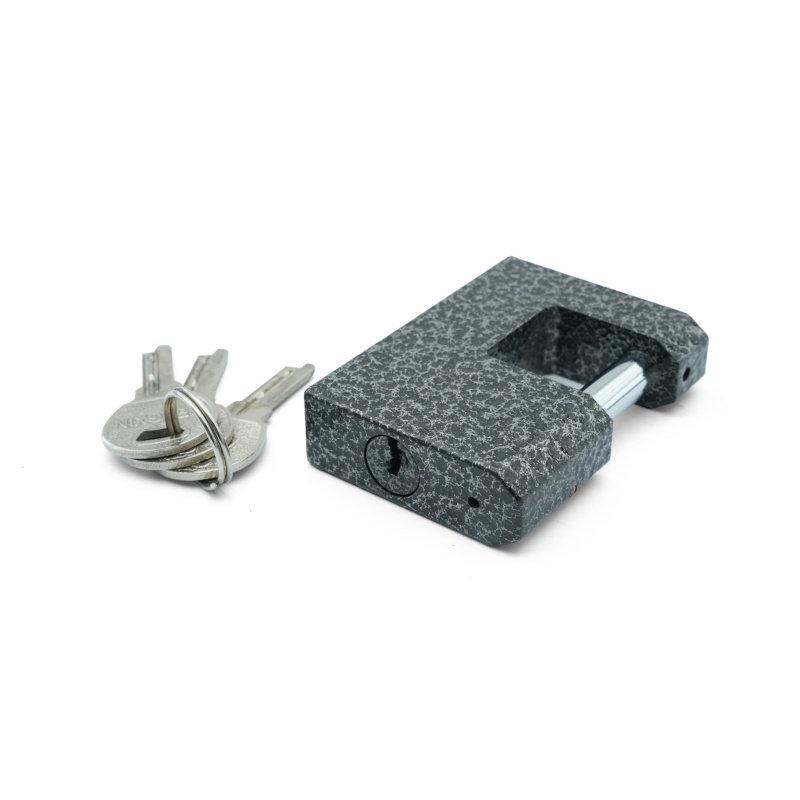
Where Failure Isn't an Option
Some environments simply cannot tolerate a broken lock. A shipping container was broken into at a port. A construction trailer was cleaned out overnight. An electrical cabinet was opened by the wrong person.
Common high-risk sectors:
- International freight and container security
- Infrastructure and utility protection
- Industrial storage and equipment
- Public facility locks
In these cases, a stable rectangular padlock keeps operations running and losses low.
A rectangular padlock isn't a fashion piece. It's a structural tool. Its value comes from shape, material, and how consistently the factory builds it.
For buyers, the real question isn't just which lock to pick. It's the question of which manufacturer can deliver the same quality across thousands of units. That consistency is what makes a lock reliable in year two, not just day one.

 Tel: +86-18858990200
 E-mail: [email protected]
 Add: No. 77, Yidianhong Avenue, Pujiang County, Jinhua City, Zhejiang Province
Copyright 2025 Pujiang Qiying Industry and Trade Co., Ltd. All Rights Reserved 
Custom Lock Cylinder Manufacturers