

 中文简体
中文简体 Español
 عربى
عربى
Request for a call today
Which Aluminum Safety Padlock Suits Industrial Applications?
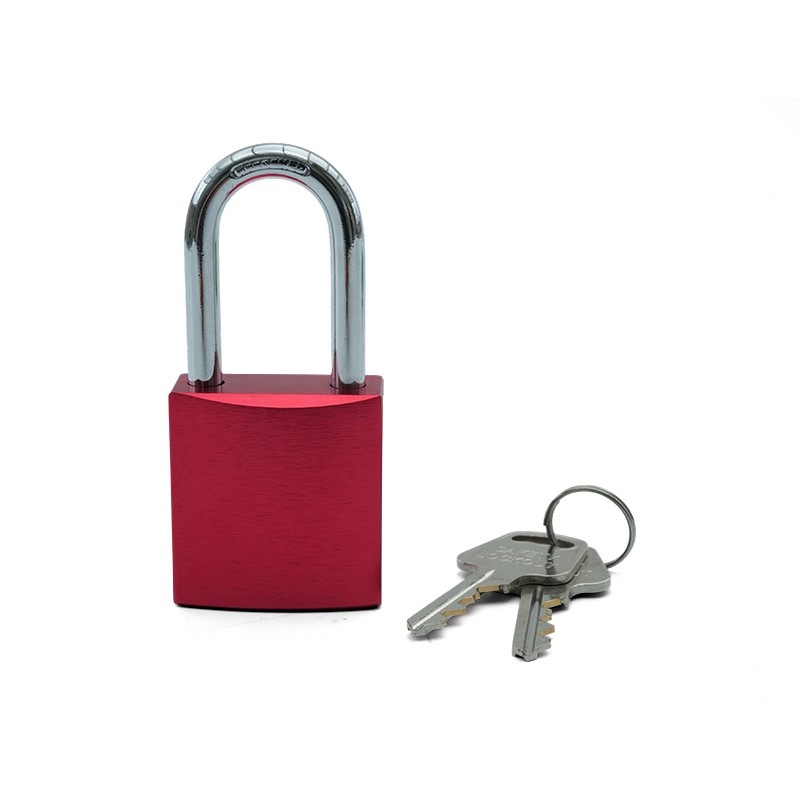
In industrial environments, safety and security are critical considerations. Locks are used to prevent unauthorized access to equipment, hazardous areas, and machinery. Among the options available, Aluminum Safety Padlocks are valued for their durability, corrosion resistance, and suitability for harsh environments. Choosing the right padlock for industrial applications requires understanding key features that ensure reliability, safety, and practicality.
Corrosion Resistance for Harsh Environments
One of the main advantages of an Aluminum Safety Padlock is its resistance to corrosion. Industrial facilities often involve exposure to moisture, chemicals, or outdoor conditions. Aluminum bodies resist rust and maintain their integrity over time, even in humid or wet environments.
When selecting a padlock for industrial use, consider whether the aluminum alloy is treated or anodized. These treatments enhance corrosion resistance and extend the padlock's service life. This feature is particularly important for outdoor installations, chemical plants, or facilities near coastal areas.
Shackle Design and Material
The shackle, or the U-shaped part of the padlock, is critical for security. In industrial applications, Aluminum Safety Padlocks often feature hardened steel shackles to resist cutting, sawing, or tampering.
Shackles come in various sizes and thicknesses depending on the type of equipment or lockout points. Choosing a padlock with an appropriate shackle ensures it can secure gates, valves, electrical panels, or storage cabinets effectively. Adjustable shackle lengths may also provide flexibility in different industrial settings.
Locking Mechanisms
Aluminum safety padlocks offer different types of locking mechanisms, such as keyed locks or combination locks. Keyed versions often provide one-way or double-locking options for extra security, while combination padlocks can eliminate the need for managing multiple keys.
For industrial applications, it is important that the locking mechanism is reliable and resistant to picking or accidental opening. A quality Aluminum Safety Padlock ensures consistent performance under repeated use, making it suitable for environments where safety compliance is critical.
Durability and Lightweight Construction
Aluminum padlocks are lightweight yet durable, which makes them practical for industrial use where multiple locks may be deployed on machinery or safety equipment. Despite being lighter than steel, aluminum bodies can withstand physical stress and maintain structural integrity during daily operations.
This combination of durability and manageable weight allows workers to carry and operate several padlocks without difficulty, which is especially important in lockout/tagout procedures. A well-constructed Aluminum Safety Padlock balances ease of handling with strong security.
Compliance with Safety Standards
Industrial applications often require adherence to specific safety regulations. Many Aluminum Safety Padlocks are designed to meet standards such as OSHA or ISO requirements for lockout/tagout procedures.
Ensuring that a padlock complies with industry safety standards provides confidence that it can be safely integrated into industrial workflows. It also helps organizations maintain regulatory compliance while protecting employees and equipment from accidents.
Color Coding and Identification
Some aluminum safety padlocks come in bright colors or offer labeling options for identification. Color coding can improve organization in industrial settings by distinguishing padlocks for different machines, departments, or hazard levels.
This feature is particularly useful in large facilities where multiple personnel use padlocks for various lockout points. A Aluminum Safety Padlock with visual identification features helps streamline operations and reduce errors.
Choosing the right Aluminum Safety Padlock for industrial applications involves considering corrosion resistance, shackle design, locking mechanisms, durability, compliance with safety standards, and optional identification features.
By evaluating these aspects, facilities can select padlocks that provide reliable security, withstand industrial conditions, and support safe operational practices. Aluminum safety padlocks offer a practical and versatile solution for protecting equipment, controlling access, and enhancing workplace safety across a variety of industrial environments.

 Tel: +86-18858990200
 E-mail: [email protected]
 Add: No. 77, Yidianhong Avenue, Pujiang County, Jinhua City, Zhejiang Province
Copyright 2025 Pujiang Qiying Industry and Trade Co., Ltd. All Rights Reserved 
Custom Lock Cylinder Manufacturers