

 中文简体
中文简体 Español
 عربى
عربى
Request for a call today
Everything You Need to Know About Dual Cylinder, Euro Turn, and Main Door Locks
Securing a home begins with understanding the hardware on the front door. While shoppers often feel overwhelmed by technical jargon, three core terms—Dual Cylinder Lock, Euro Turn Cylinder Lock, and Main Door Cylinder Lock—appear again and again. This guide clarifies their features, benefits, and ideal placement so that every household can make an informed choice.
A Dual Cylinder Lock is designed for doors that contain glass panels or sit close to windows. Because it requires a key to open from both sides, an intruder cannot simply break the glass, reach in, and turn a thumb-turn. Installation is straightforward for professionals, yet care must be taken to keep a spare key nearby for quick exit in an emergency. Regular lubrication keeps the Dual Cylinder Lock operating smoothly year after year.
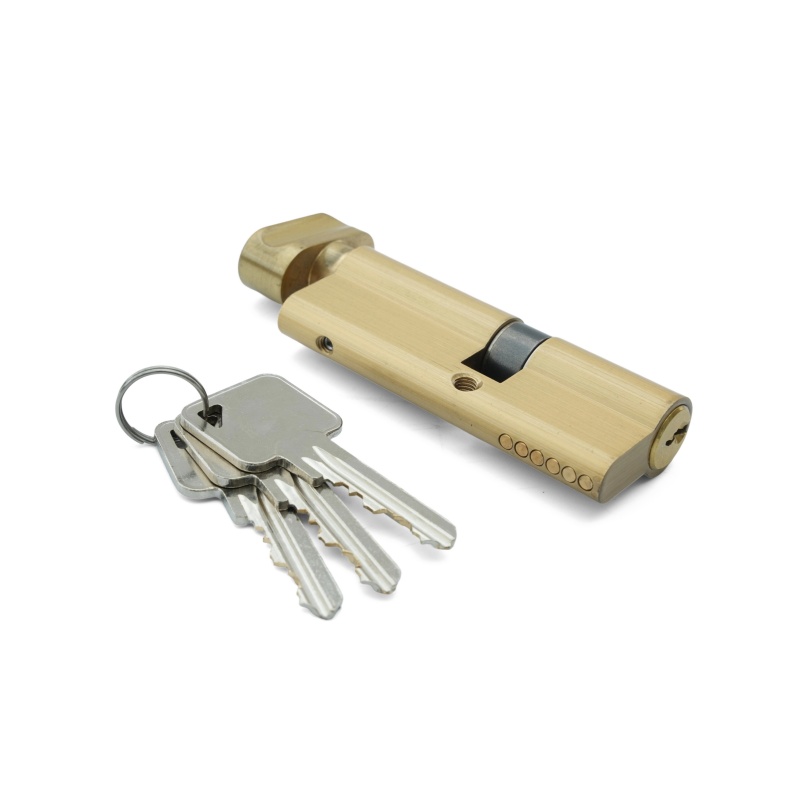
Across Europe, the Euro Turn Cylinder Lock has become the default standard in apartments, offices, and modern residential complexes. Its oval shape fits neatly into a mortise case, and the “turn” refers to the small thumb-piece on the inner side that allows fast egress without a key. Quality levels vary widely, so buyers should look for at least a three-star British Kite Mark certification when selecting a Euro Turn Cylinder Lock for external use. Many models also support keyed-alike suites, letting one key operate several Euro Turn Cylinder Locks around the property.
For homeowners who want a single solution for timber, composite, or metal entrance doors, the Main Door Cylinder Lock remains the versatile option. It typically comes in either double-cylinder or single-cylinder formats, and its length can be trimmed to match door thicknesses from 60 mm up to 120 mm. Security ratings such as EN 1303 and ANSI Grade 2 provide a quick reference for durability.
Because the Main Door Cylinder Lock is the barrier a visitor meets, its finish—satin nickel, polished brass, or matte black—also contributes to curb appeal.
Comparing the three, the Dual Cylinder Lock prioritizes heightened security, the Euro Turn Cylinder Lock balances convenience with moderate protection, and the Main Door Cylinder Lock offers broad adaptability. Budget-conscious households often combine them: a Dual Cylinder Lock on the back garden door, a Euro Turn Cylinder Lock on a communal entrance, and a robust Main Door Cylinder Lock at the front.
Maintenance is surprisingly similar for all types. A silicone-based spray applied twice a year keeps pins and springs moving freely. Keys should be copied only by reputable locksmiths to prevent tolerance drift that could jam any Dual Cylinder Lock, Euro Turn Cylinder Lock, or Main Door Cylinder Lock. Finally, when moving into a new property, rekeying or replacing all cylinders immediately ensures that previous residents or contractors no longer have access.
By recognizing the strengths of each product, families can assemble a layered security plan without guesswork. Whether the priority is deterrence with a Dual Cylinder Lock, daily ease of use through a Euro Turn Cylinder Lock, or flexible styling from a Main Door Cylinder Lock, the right choice is now clearer than ever.

 Tel: +86-18858990200
 E-mail: [email protected]
 Add: No. 77, Yidianhong Avenue, Pujiang County, Jinhua City, Zhejiang Province
Copyright 2025 Pujiang Qiying Industry and Trade Co., Ltd. All Rights Reserved 
Custom Lock Cylinder Manufacturers