

 中文简体
中文简体 Español
 عربى
عربى
Request for a call today
Can A Door Still Jam With A Double Profile Cylinder?
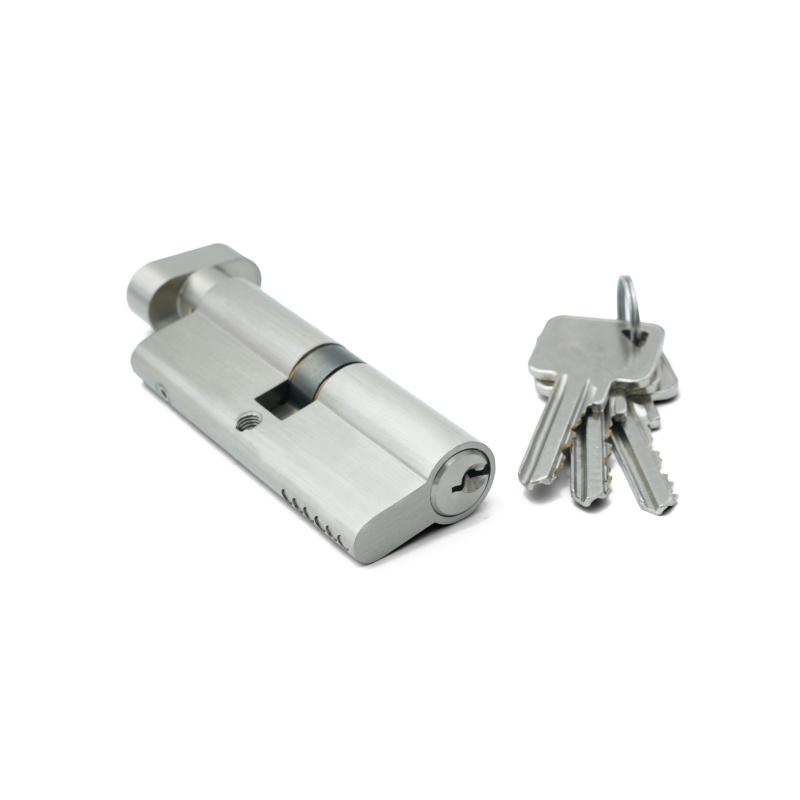
Double profile cylinder is often associated with smooth daily operation, so when a key suddenly becomes difficult to turn, many property owners immediately assume the cylinder has failed. Locksmiths, however, tend to approach the situation differently. Before removing any hardware, they usually spend several minutes checking how the entire door behaves.
In recent maintenance work, technicians have noticed that a door refusing to open does not always point to a damaged double profile cylinder. In many service calls, the lock is only one part of a much larger mechanical picture.
The Question Is Usually About The Door
When a customer reports that the key no longer turns freely, experienced locksmiths rarely begin by replacing parts.
Instead, they ask simple questions.
Did the problem appear overnight?
Does it happen only in the morning?
Can the key still be inserted completely?
These answers often reveal more than the lock itself.
A double profile cylinder may appear to be the source of the problem, while the actual change has occurred somewhere else in the door system.
Seasonal Movement Often Changes Alignment
Wooden doors, metal frames, and building structures all respond differently to changing weather.
After periods of high humidity or large temperature differences, slight movement may occur around the door opening.
Most people never notice these small shifts until they try to lock the door.
The key suddenly feels tighter.
Extra force is needed.
Turning becomes inconsistent.
In these situations, technicians usually inspect door alignment before assuming the double profile cylinder requires replacement.
Wear Develops Quietly Over Time
Lock problems rarely begin with complete failure.
Instead, users often remember small changes that seemed unimportant at the time.
Perhaps the handle started feeling heavier.
Perhaps the key occasionally needed a second attempt.
Perhaps locking the door required pushing it slightly.
Each change looked minor on its own.
Months later, the same door becomes difficult to operate, and attention immediately turns toward the double profile cylinder.
Maintenance records suggest that these earlier signs are often more valuable than the final failure itself.
Dust And Daily Use Also Leave Traces
Many entrance doors are opened dozens of times every day.
Apartment buildings.
Office corridors.
Storage rooms.
Retail entrances.
With repeated use, fine dust and small particles gradually find their way into moving components around the locking system.
Although the double profile cylinder is designed for frequent operation, surrounding conditions still influence how smoothly the complete mechanism works.
For this reason, professional servicing often includes inspecting the lock case, strike plate, and door movement together rather than focusing on a single component.
Replacement Is Not Always The Choice
One noticeable change in the locksmith industry is that experienced technicians are becoming more conservative about immediate replacement.
Instead of fitting a new double profile cylinder during the first visit, many now complete a full mechanical inspection before recommending new hardware.
Sometimes the cylinder is genuinely worn.
Sometimes the door simply needs adjustment.
Sometimes lubrication and realignment restore normal operation without replacing any major parts.
The inspection process has become just as important as the repair itself.
Small Changes Usually Appear
Many service reports describe the same pattern.
The lock did not stop working without warning.
The warning signs were simply ignored.
A slightly rough turn.
A little more resistance.
A door that no longer closed as easily as before.
These gradual changes often develop long before anyone considers checking the double profile cylinder.
For maintenance professionals, recognising those early signals is becoming more valuable than responding after the door refuses to open completely.

 Tel: +86-18858990200
 E-mail: [email protected]
 Add: No. 77, Yidianhong Avenue, Pujiang County, Jinhua City, Zhejiang Province
Copyright 2025 Pujiang Qiying Industry and Trade Co., Ltd. All Rights Reserved 
Custom Lock Cylinder Manufacturers